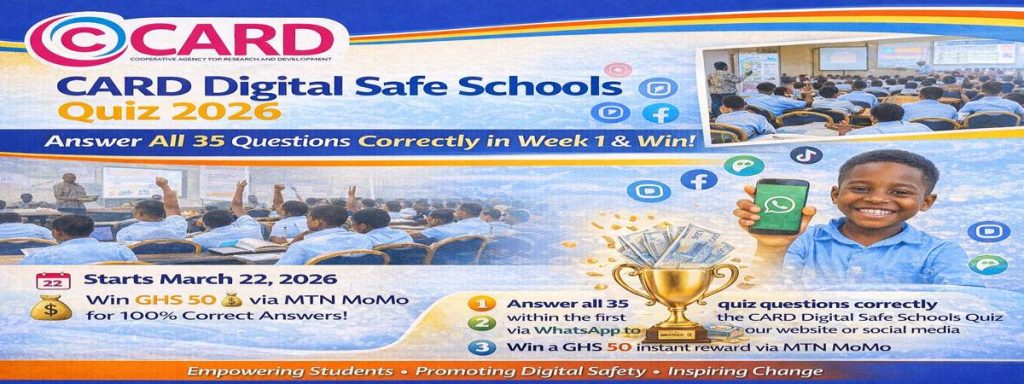
ANSWERS TO THE QUESTIONS ON THE ANTI-BULLYING & CHILD PROTECTION ONLINE QUIZ COOPETITION UNDER DIGITAL SAFE SCHOOL (DSFS) PROGRAM OF CARD GHANA
Empowering Schools: CARD Launches the READ Anti-Bullying & Child Protection Program
The Cooperative Agency for Research and Development (CARD) is proud to introduce the Rural Education and Academic Development (READ) Program, a comprehensive initiative designed to promote safe, inclusive, and supportive learning environments across schools in Ghana.
About the CARD-READ Program
The Anti-Bullying & Child Protection Module under READ equips students, teachers, parents, and community stakeholders with the knowledge and skills to prevent, identify, and respond to bullying, cyberbullying, and other forms of violence affecting children. This program addresses all forms of school-based bullying—physical, verbal, social, and online—while also raising awareness of related risks such as harmful practices and gender-based violence.
Who Can Participate
The program is designed for everyone involved in a child’s education journey, including:
• READ Coordinators – facilitate training across schools and districts
• Teachers & School Staff – monitor, prevent, and respond to bullying
• School Administrators – implement policies and oversee referral systems
• Parents & Guardians – support children and collaborate with schools
• Students – learn about safe behaviors, responsible digital use, and reporting mechanisms
Training Structure
The CARD-READ training is interactive and practical, offering:
• Full Module: 2 days (6–7 hours/day)
• Condensed Version: 1 day (4–5 hours)
• Methods: Role-plays, case studies, group discussions, digital simulations, and hands-on exercises
By the end of the training, participants will be able to:
1. Identify and understand all forms of bullying and associated risks
2. Implement effective prevention strategies in schools
3. Respond to incidents safely and refer victims to appropriate support
4. Engage parents and communities to reinforce child protection
5. Monitor, evaluate, and sustain anti-bullying initiatives
Learning Objectives in Action
The program’s sessions are carefully designed to produce measurable results:
• Introduction to Bullying & School Violence: Understand types of bullying and their effects
• Roles & Responsibilities: Clarify how students, teachers, parents, and school authorities contribute to prevention and response
• Prevention Strategies & Safe School Environments: Develop peer mentorship programs, awareness campaigns, and safe reporting mechanisms
• Digital Safety & Cyberbullying: Promote responsible online behavior and safe digital reporting
• Response & Referral Systems: Document and refer incidents appropriately
• Engaging Parents & Community: Mobilize families and local stakeholders in child protection efforts
• Monitoring, Evaluation & Sustainability: Track progress and continuously improve school anti-bullying practices
Tools and Resources
To ensure practical implementation, CARD provides:
• Participant Workbooks with exercises, case studies, and action planning templates
• Facilitator Guides with step-by-step instructions for trainers
• Posters, Charts & Flashcards for classroom awareness
• Digital Tools & Templates for anonymous reporting, tracking, and monitoring
• Optional Materials like scenario cards, sample campaigns, and instructional videos
Measuring Impact
CARD-READ includes pre- and post-training assessments, practical demonstrations, and feedback surveys to ensure participants gain confidence and practical skills. Successful participants receive a CARD-READ Certificate, demonstrating their ability to create safe and inclusive school environments.
Sustaining Change
The READ Program emphasizes continuous improvement through:
• Regular school monitoring and review meetings
• Refresher sessions for teachers and student leaders
• Peer learning and mentorship across schools
• Feedback mechanisms for students, parents, and teachers
• Ongoing updates to school policies and campaigns
Join Us in Building Safe Schools
With the CARD-READ Anti-Bullying & Child Protection Program, schools can become spaces where every child feels safe, respected, and supported. By empowering students, educators, and communities, CARD is driving a culture of safety, inclusion, and positive learning for the next generation.
For more information or to participate in the CARD-READ Program, visit our website or follow our social media channels for updates and resources.
CARD-READ Program Quiz: Anti-Bullying & Child Protection
1. What is bullying?
A. A one-time argument between students
B. Repeated intentional harm among students
C. Friendly teasing
D. Studying with friends
Answer: B
2. Cyberbullying occurs when:
A. A student shares homework online
B. Students play online games
C. Digital platforms are used to harass or humiliate peers
D. Students post class schedules online
Answer: C
3. Gender-Based Violence (GBV) refers to:
A. Violence in sports
B. Violence rooted in gender inequality
C. Fighting between classmates
D. Cyberbullying only
Answer: B
4. Which of these is an example of a harmful practice?
A. Peer tutoring
B. Child marriage
C. Class discussions
D. Group study
Answer: B
5. What does TFSV stand for?
A. Technology-Facilitated Sexual Violence
B. Teacher-Focused Student Violence
C. Technology-Free School Visits
D. Teen Friend Support Volunteer
Answer: A
6. Who is responsible for preventing bullying in schools?
A. Only teachers
B. Only parents
C. Everyone: students, teachers, parents, and school authorities
D. Only school heads
Answer: C
7. Peer mentorship programs are designed to:
A. Punish students who bully
B. Support younger students and prevent bullying
C. Replace teachers
D. Organize exams
Answer: B
8. A safe reporting mechanism is:
A. A place where students can report bullying confidentially
B. A notice board for exam results
C. A school library
D. A playground
Answer: A
9. What should a student do if they witness bullying?
A. Ignore it
B. Participate
C. Report it safely to a teacher or counselor
D. Post it online
Answer: C
10. Which of the following is NOT a form of bullying?
A. Physical
B. Verbal
C. Social
D. Studying together
Answer: D
11. Role-play exercises in training help participants:
A. Memorize definitions
B. Practice real-life bullying situations safely
C. Take exams
D. Draw school maps
Answer: B
12. Reflection journals are used to:
A. Record students’ grades
B. Write personal thoughts and learning points
C. Punish students
D. Keep attendance
Answer: B
13. What is an example of cyberbullying?
A. Playing online games together
B. Sending threatening messages via WhatsApp
C. Submitting homework online
D. Watching educational videos
Answer: B
14. Who should teachers report bullying incidents to?
A. Friends
B. Parents only
C. School administrators or counselors
D. Social media
Answer: C
15. What is the main goal of awareness campaigns in schools?
A. Promote bullying
B. Educate students about bullying and safety
C. Increase exams
D. Organize sports
Answer: B
16. Which of these is a safe digital practice?
A. Sharing passwords with friends
B. Posting private photos of classmates
C. Protecting personal information online
D. Replying to threatening messages aggressively
Answer: C
17. A referral pathway is:
A. A method for students to skip classes
B. The process to escalate incidents to counselors or authorities
C. The school bus route
D. A library rule
Answer: B
18. Which is an example of a positive discipline approach?
A. Physical punishment
B. Non-violent and inclusive methods
C. Public shaming
D. Ignoring students’ mistakes
Answer: B
19. Monitoring dashboards in schools help to:
A. Track bullying incidents and follow-ups
B. Monitor exam scores only
C. Track lunch menus
D. Monitor sports results
Answer: A
20. Parents can support child protection by:
A. Ignoring school reports
B. Collaborating with schools and attending workshops
C. Punishing teachers
D. Preventing children from making friends
Answer: B
21. Which of the following is an example of school-based prevention?
A. Creating peer-support clubs
B. Ignoring conflicts
C. Online gossiping
D. Avoiding school assemblies
Answer: A
22. A practical exercise in training could be:
A. Mapping referral networks
B. Watching a movie
C. Taking a nap
D. Playing sports only
Answer: A
23. What is the purpose of post-training assessments?
A. Test memory only
B. Measure knowledge gained and practical skills
C. Punish students
D. Replace class tests
Answer: B
24. Which activity helps students learn about digital safety?
A. Posting classmates’ photos without consent
B. Simulating cyberbullying incidents safely
C. Ignoring online threats
D. Avoiding technology
Answer: B
25. How can schools sustain anti-bullying programs?
A. One-time training only
B. Regular monitoring, refresher sessions, and peer learning
C. Punishing students frequently
D. Ignoring incidents
Answer: B
26. What should a student do after reporting a bullying incident?
A. Tell everyone publicly
B. Follow up if needed and trust school authorities
C. Retaliate against the bully
D. Quit school
Answer: B
27. Community involvement in child protection includes:
A. Organizing awareness workshops
B. Reporting incidents collaboratively with schools
C. Supporting school policies
D. All of the above
Answer: D
28. Role of a facilitator guide is to:
A. Teach math
B. Guide trainers to deliver sessions effectively
C. Monitor sports activities
D. Replace teachers
Answer: B
29. Flashcards and posters in schools help to:
A. Decorate classrooms
B. Reinforce awareness of bullying and reporting mechanisms
C. Replace textbooks
D. Show exam results
Answer: B
30. Peer mentorship supports:
A. Bullying
B. Safe, positive behavior among students
C. Only teachers
D. School management only
Answer: B
31. Which of these is an interactive method in training?
A. Lectures only
B. Group discussion and simulations
C. Sleeping during class
D. Memorizing rules silently
Answer: B
32. Which of the following is an outcome of the CARD-READ training?
A. Students feel unsafe
B. Teachers and students are confident to prevent and report bullying
C. Schools ignore incidents
D. Communities are uninvolved
Answer: B
33. What should be included in a bullying incident report?
A. Type of incident, affected students, witnesses, immediate response
B. Only the name of the bully
C. School timetable
D. Teacher’s personal opinion
Answer: A
34. The READ Program helps schools:
A. Increase sports competitions
B. Become safe, child-friendly, and inclusive
C. Reduce class hours
D. Focus only on exams
Answer: B
35. What is the benefit of simulations in training?
A. Test decision-making in safe, realistic scenarios
B. Replace exams
C. Reduce learning time
D. Encourage bullying
Answer: A